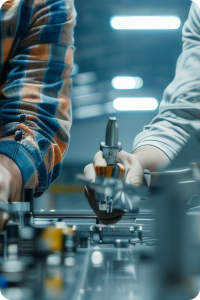
On March 20, the 4th CNCS Nuclear Power Construction Safety Development Forum and the Seminar on Energy Construction Safety & Intelligent Construction Technology successfully concluded in Xi'an, Shaanxi. Hosted by Xi'an Fengshu Electronic Technology Development Co., Ltd., the forum gathered authoritative experts and industry elites from the fields of nuclear power, construction, intelligent manufacturing, and scientific R&D. Attendees shared cutting-edge technological achievements, discussed industry pain points, and explored new paths for the safe, intelligent, and digital development of the nuclear power and energy construction sectors. Since its inception in 2023, the CNCS Nuclear Power Construction Safety Development Forum has evolved into an annual industry event, bringing together core participants from the nuclear power engineering construction safety supply chain to build an efficient and convenient platform for industry technology exchange.
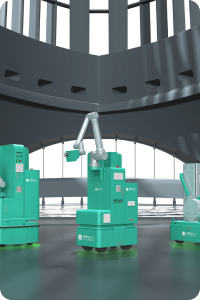
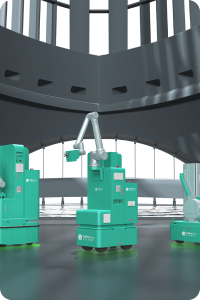
Li Zike, Founder and CEO of Fulltime Robotics, was invited to attend the conference and delivered a keynote speech titled "Construction Robots Driving Systemic Industry Transformation" at the "Energy Construction Safety and Intelligent Construction Sub-forum." Aligning with the high-standard safety requirements of the nuclear power and energy construction fields, he shared Fulltime's technological expertise and practical experience in construction robotics, providing a systematic explanation across four dimensions: technological evolution, underlying logic, industrial transformation, and implementation methods.


In his speech, Li Zike proposed that the intelligent development of construction robots has formed a clear four-level evolutionary framework: from L1 (human assistance and physical enhancement of engineering equipment), to L2 (remote control realizing the alienation of human-controlled tools), then to L3 (tool automation relying on preset programs with basic "cerebellum" functions), and finally advancing to L4 (Embodied Intelligence with "brain" capabilities to autonomously handle unstructured operations). The industry is currently in a critical climbing period from L3 to L4, with technological support accelerating from a hardware control and sensor perception-based model to a software-driven model relying on data accumulation and algorithm optimization. This trend is particularly crucial for high-safety-standard scenarios such as nuclear power and energy construction.


Li Zike also pointed out that the iterative upgrade of tools inevitably changes workers' operating methods, required skills, and the coordination focus of managers—this is the internal mechanism by which construction robots drive industry transformation. The introduction of construction robots to construction sites is by no means a simple equipment replacement; rather, it reconstructs the core relationship between laborers, tools, and work objects. Its value lies not only in localized efficiency improvement but also in providing structural momentum for the safety, intelligence, and standardization upgrades of the construction industry.


Based on the underlying logic of tool innovation, Li Zike clearly stated that this transformation is specifically reflected in four dimensions:
Business Model: The "General Construction Contractor - Robotics Labor Subcontractor" model reduces traditional multi-layer subcontracting chains, making profit distribution more direct and responsibility attribution clearer.
Organizational Management: Reconstructing the human-robot collaboration architecture around new positions such as robot operators, clearly defining the rights and responsibilities at each stage.
Process & Craftsmanship: Reconstructing construction procedures and techniques around human-robot collaboration to form reusable, standardized operating procedures.
Quality & Safety: The standardized operation of robots significantly improves the stability of construction quality and reduces safety risks from human operations, highly aligning with the stringent requirements of nuclear power and energy construction.


The systemic transformation of the industry injects strong momentum into the safe and intelligent development of construction. However, the large-scale application of construction robots still faces many challenges, especially in special engineering scenarios like nuclear power construction and energy projects, which have extremely high requirements for safety, quality, and precision, demanding rigorous advancement.
Li Zike believes that the successful application of construction robots is not a breakthrough in a single link, but the synergistic result of five core elements: Scenario, Tool, Organization, Method, and Capability. It requires basing on specific construction scenarios like nuclear power and energy projects to accurately distinguish the advantages of humans and machines, clearly defining a safety-first application positioning; selecting highly reliable and adaptable robotic equipment as tool support; building an organizational structure with clear human-robot collaboration, defined responsibilities, and robust safety controls; optimizing standardized construction procedures and techniques that comply with nuclear power and energy construction norms based on operational characteristics; and enhancing personnel's operational and emergency response capabilities through skills training. These five elements are interlinked and systematically synergistic, which not only opens up the conversion chain from technology to value for construction robots but also provides a reliable path for safe and intelligent construction in high-safety-demand fields like nuclear power and energy.
The successful conclusion of this forum has further consolidated industry consensus and provided valuable insights for advancing nuclear power and energy construction toward higher levels of safety, intelligence, and digitalization. Li Zike's report, with its clear framework and solid practical experience, presented a complete picture of how construction robots are driving industry transformation to the attendees, sparking widespread resonance.
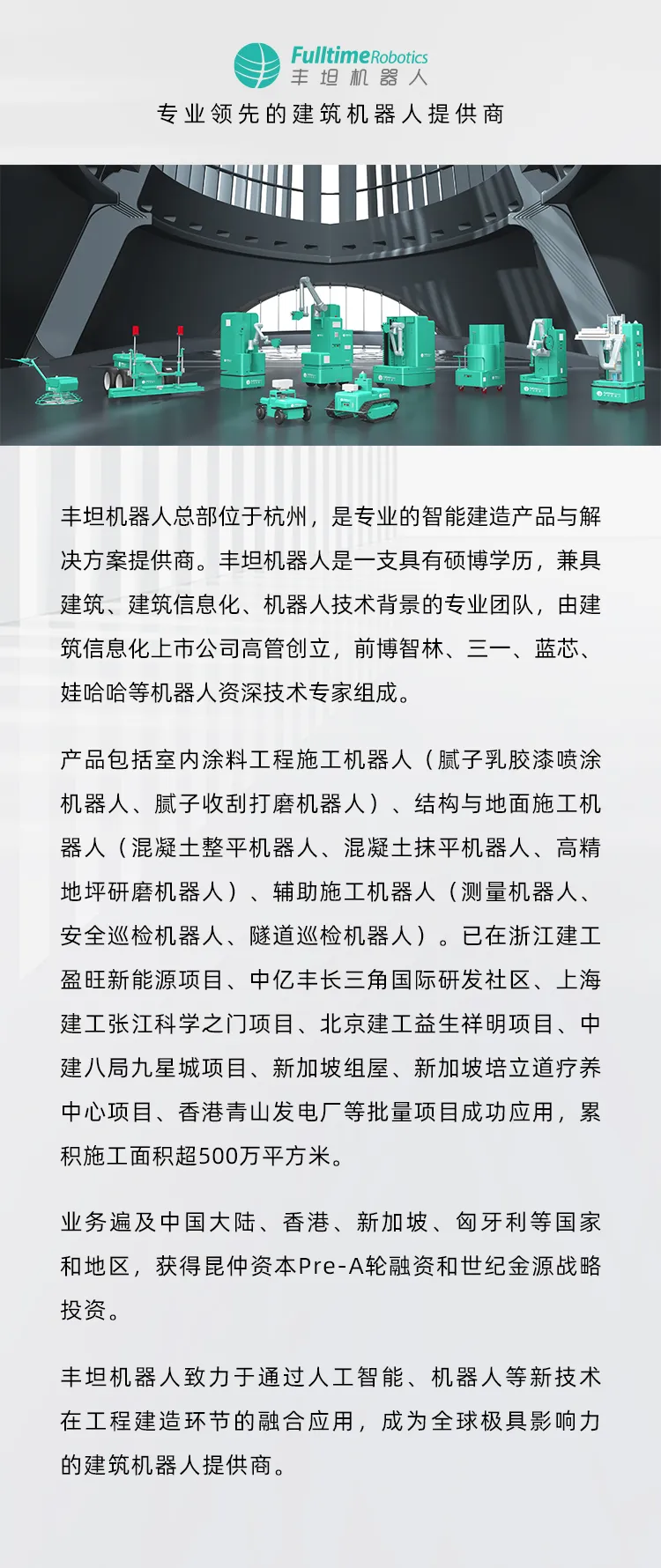
Looking ahead, Fulltime Robotics will continue to delve deeply into the R&D and scenario implementation of construction robots. By joining hands with partners in the nuclear power and energy construction fields, the company aims to jointly explore the optimal path for human-robot collaboration and continuously contribute to the high-quality development of the industry.

>